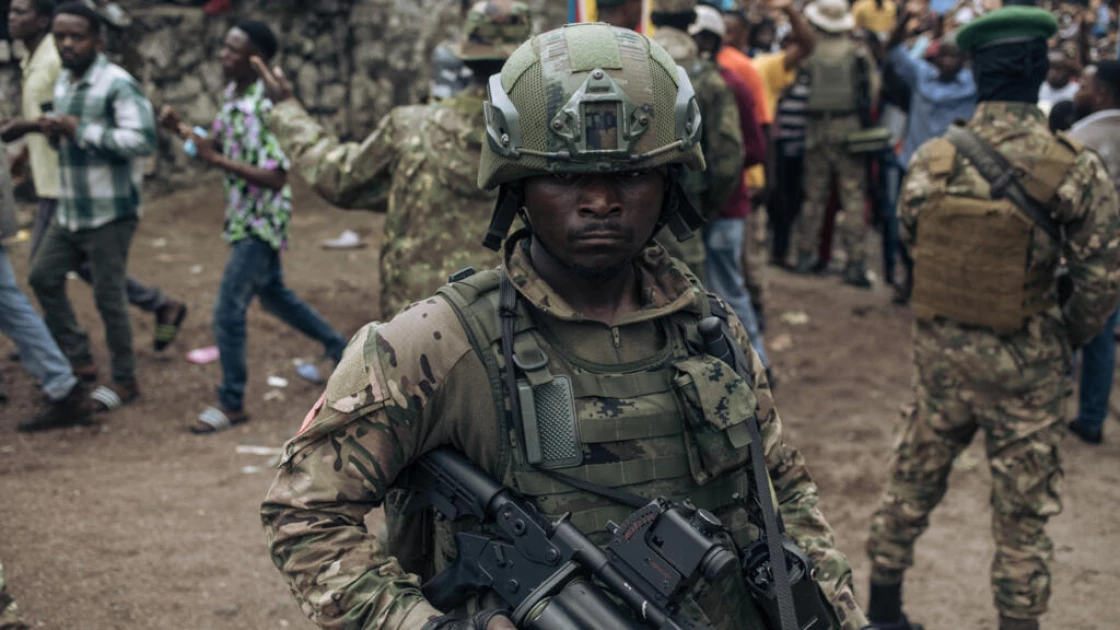
The government of the Democratic Republic of Congo (DRC) has affirmed its support for a ceasefire in the country’s eastern provinces, but the M23 militia, backed by Rwanda, has rejected the proposal, calling it a ploy to stall genuine peace efforts.
No official start date for the truce was provided. The announcement follows mediation by Angola, which urged both sides to observe a ceasefire beginning February 18. Eastern DRC, rich in minerals and natural resources, has faced cycles of armed conflict for more than 30 years, fueled by multiple militias and regional tensions.
Angola recently renewed its push for dialogue, releasing a plan for a ceasefire aimed at curbing the ongoing hostilities. This development comes as the United Nations prepares to deploy peacekeepers to support any agreed truce in the volatile region.
The M23 has been active along the eastern borders with Rwanda and Burundi since 2021, targeting towns and strategic locations. Repeated attempts at peace have failed, with several ceasefires signed and broken over the last few years.
“The president of the republic has accepted the principle of a ceasefire,” the Congolese presidency stated on Friday.
The M23 quickly dismissed the announcement, accusing the government of “delaying tactics and attempts at manipulation by the Kinshasa regime.” The militia further claimed that the DRC continues “indiscriminate attacks” in the region while pretending to support Angola’s peace plan. “The aim,” it said, “is to delay the search for a lasting solution to end the conflict.”
Violence intensified last year when M23 forces captured Goma, North Kivu’s capital, during a rapid offensive that killed thousands. Bukavu, South Kivu’s main city, was seized shortly afterward, illustrating the militia’s growing strength.
Recent diplomatic efforts have involved Qatar and the United States. Qatar has facilitated talks between the Congolese government and M23, leading to a ceasefire commitment in July, while a US-mediated agreement between the DRC and Rwanda was signed in Washington in December. Despite these accords, fighting on the ground continues.
On Friday, clashes persisted in the hills near Minembwe, South Kivu, where the Congolese army, supported by a local militia and Burundian troops, is engaged with a group allied to M23, according to local and security sources.
The government outlined steps for implementing the ceasefire, including the “strict and immediate freezing of positions,” halting troop reinforcements, ending offensive resupplies, and stopping rotation of forces. It also demanded an “end to all external support to armed groups operating on national territory.”
UN officials are preparing to support peace enforcement. Vivian van de Perre, the acting head of the UN mission in DRC, confirmed that reconnaissance flights will soon begin in Uvira, a city near Burundi that M23 briefly occupied before withdrawing under US pressure. MONUSCO, the UN’s mission in DRC, currently has about 7,000 peacekeepers in the east, with its nearest base to Uvira located in Goma.
The African Union has taken the lead in the mediation process, appointing Togolese President Faure Gnassingbe to coordinate talks, alongside Angolan President Joao Lourenco. This follows a failed mediation in late 2024, when Angola-led negotiations collapsed just before a summit in Luanda intended to bring together the Congolese and Rwandan presidents.































Comments
Sign in with Google to comment, reply, and like comments.
Continue with Google